The House For a Collector of Ideas
Project Statement
Firmly connected to Rhode Island School of Design (RISD), The Museum of Art also represents an important strand to the teaching of many of the School’s departments, and it is central to the school’s mission to find ways to enable students and visitors alike to see the collection with fresh eyes. The central idea is to give flexibility to the museum’s curators in order that they can rotate elements of its permanent collection in new ways. This will provide opportunities to show items that might otherwise remain in storage, and will allow for new perceptions of the chosen pieces and their associated narratives.
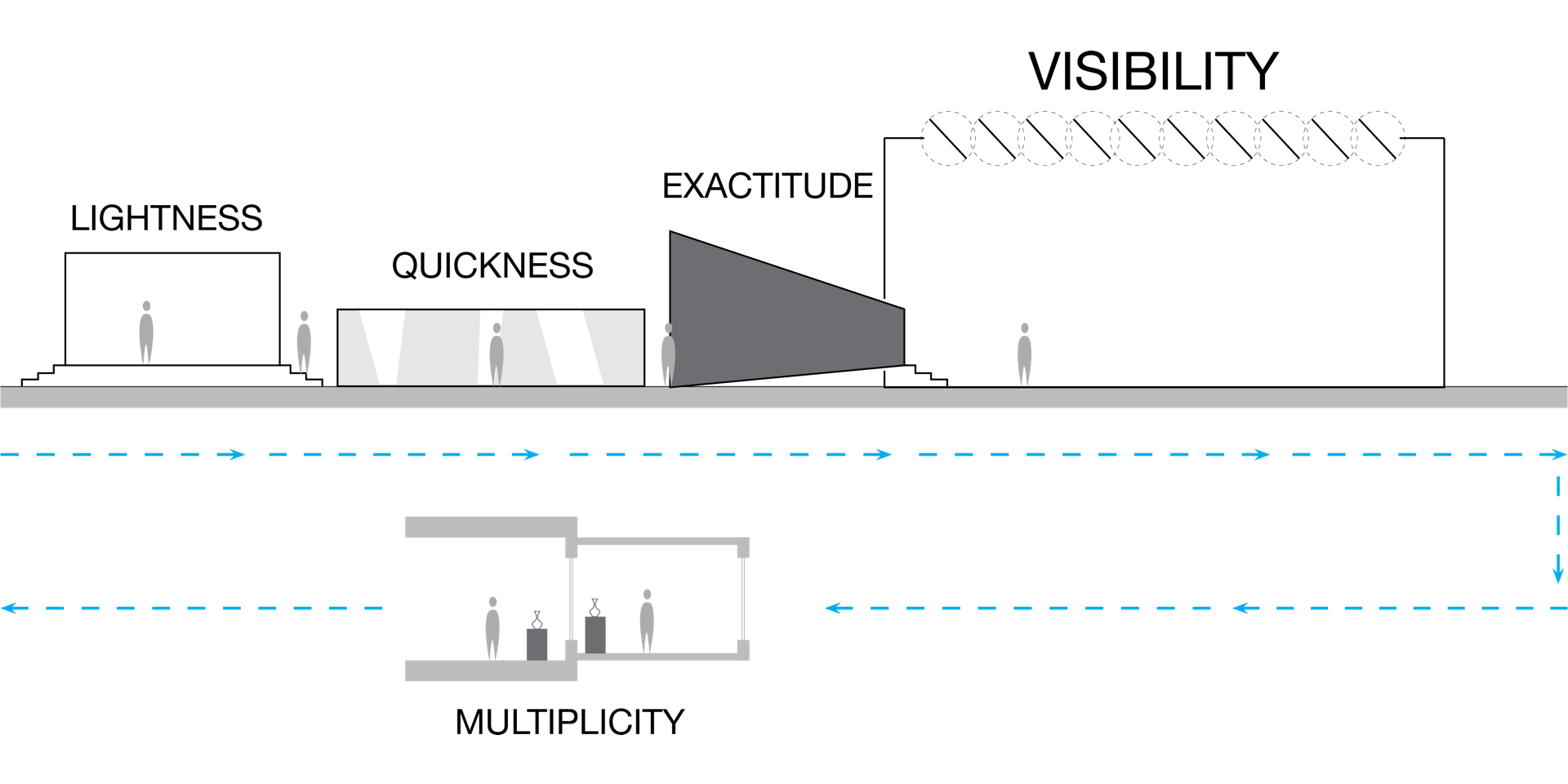
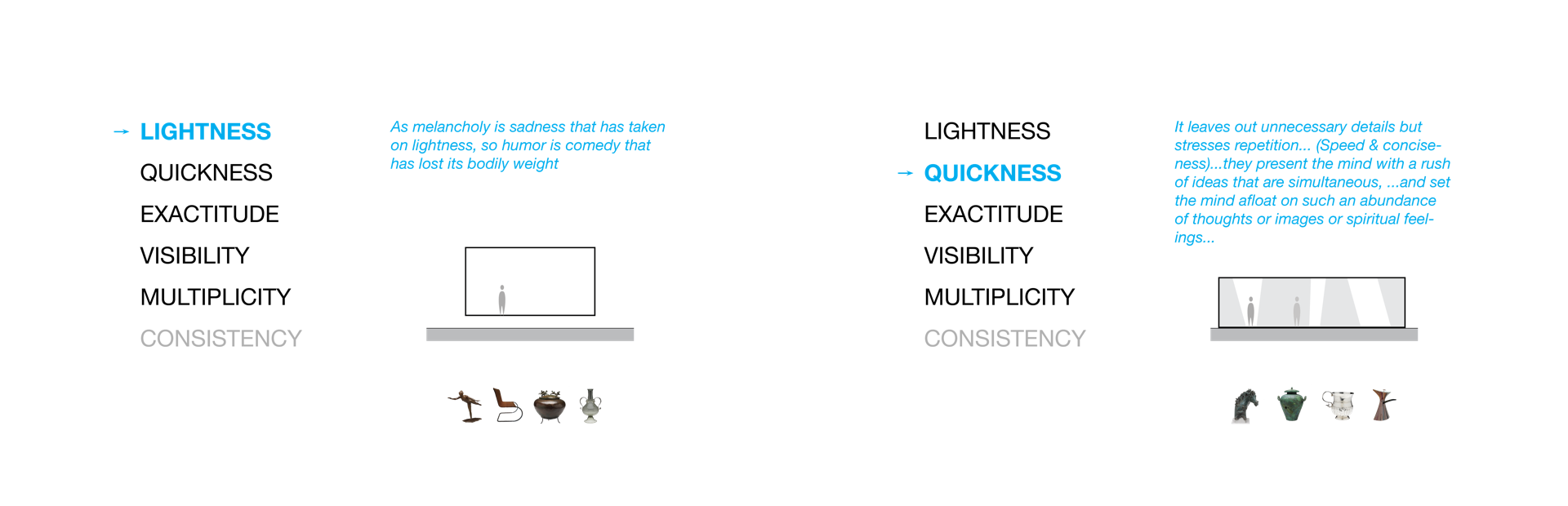
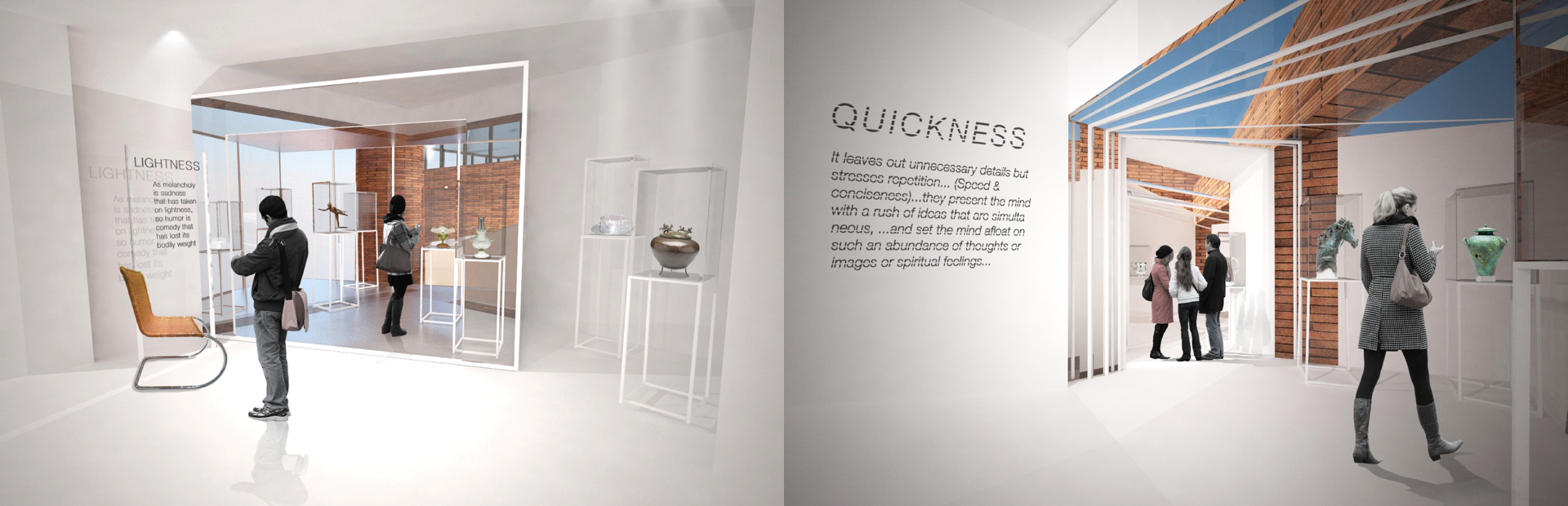
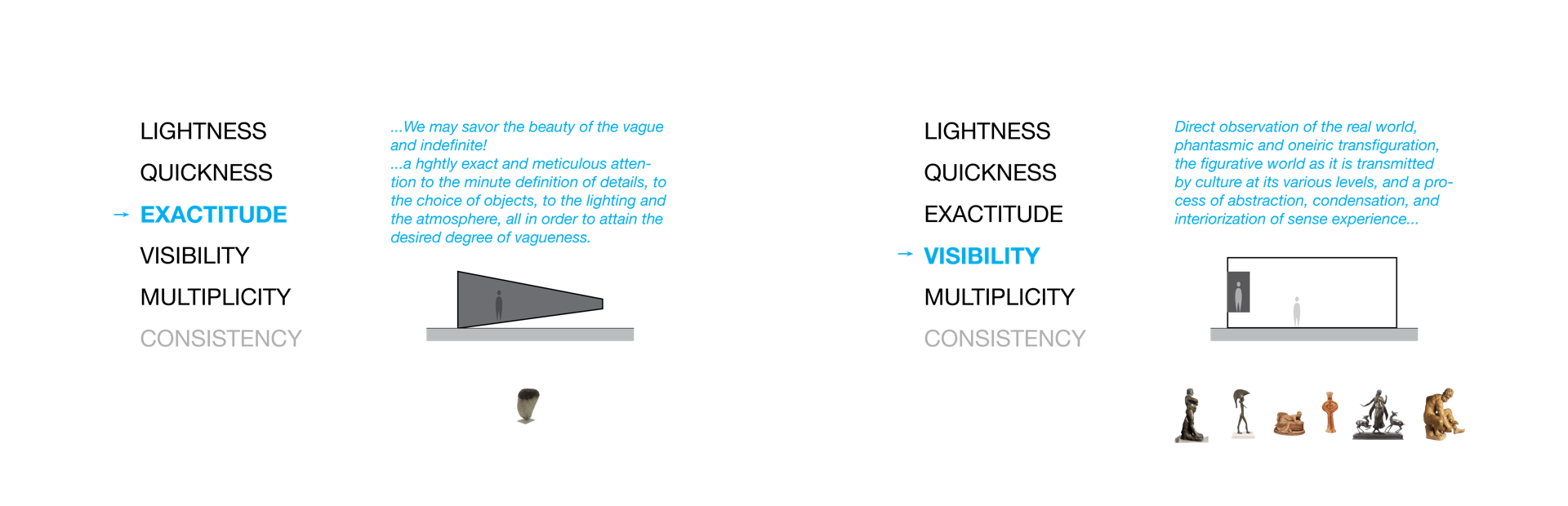
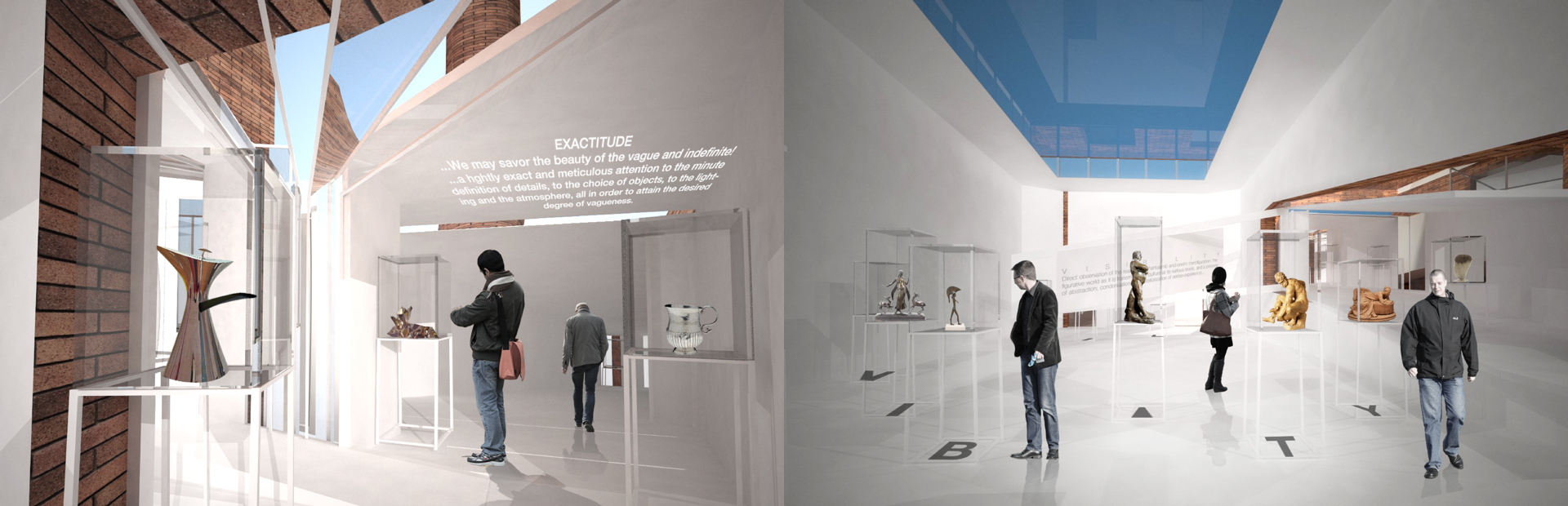
My ‘collector’ is not a real person, but instead exists in our minds as a twenty-first century version of the flâneur identified by the philosopher, Walter Benjamin (1892 –1940). Each of the works of art in the museum can be ‘read’ in many different ways, and In order to properly illuminate the complexities of the ideas encapsulated in each, I read Italo Calvino’s ‘Six Memos for the Next Millennium’ as the starting point for this speculation. The memos were intended to be the subjects of a series of lectures to be delivered at Harvard University in 1985, but were never delivered, due to the untimely death of the author. They are: lightness, quickness, exactitude, visibility, multiplicity. And a sixth, consistency, was in the course of preparation at the time of Calvino’s death, but never finished.
The Site
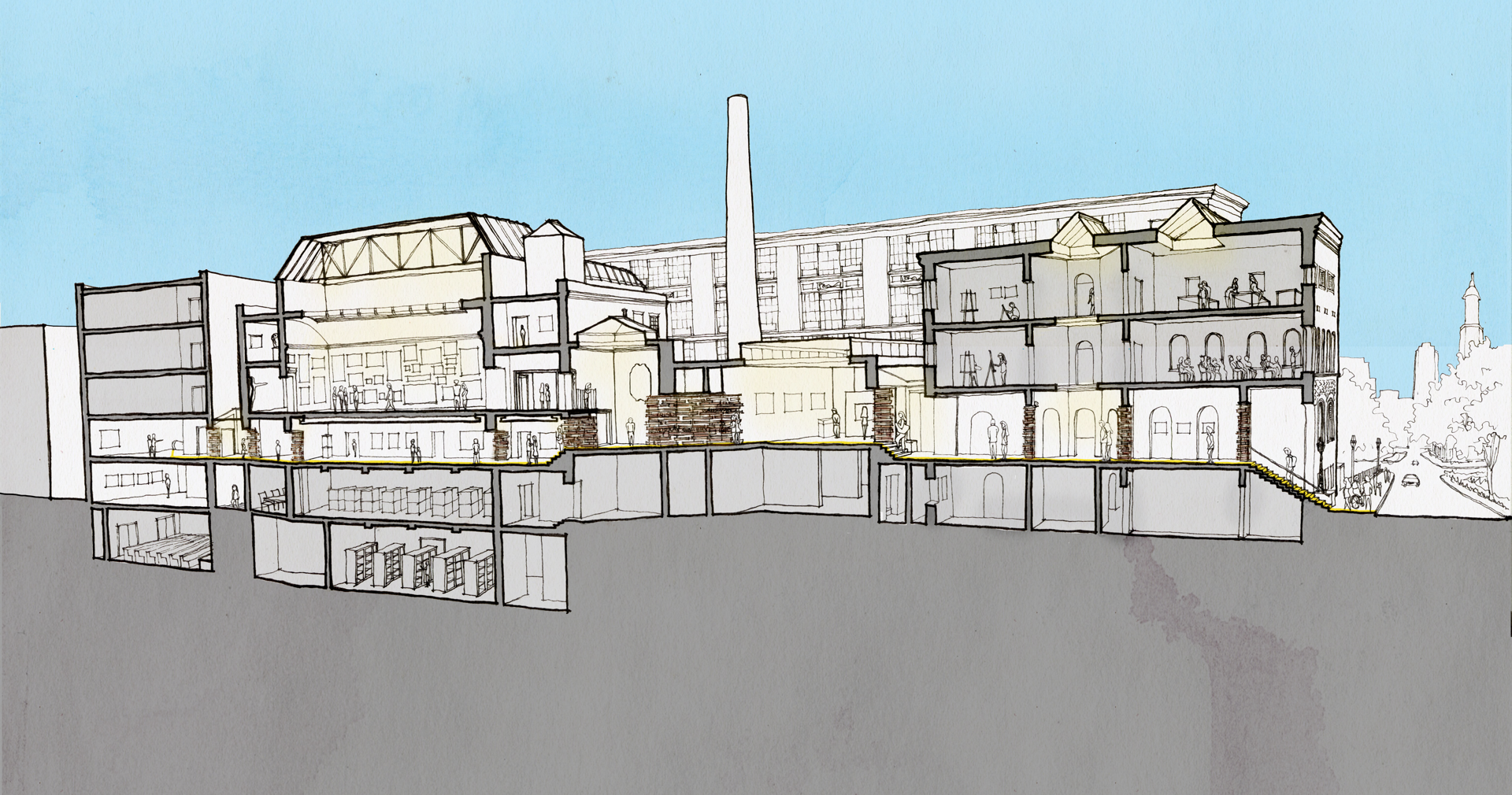
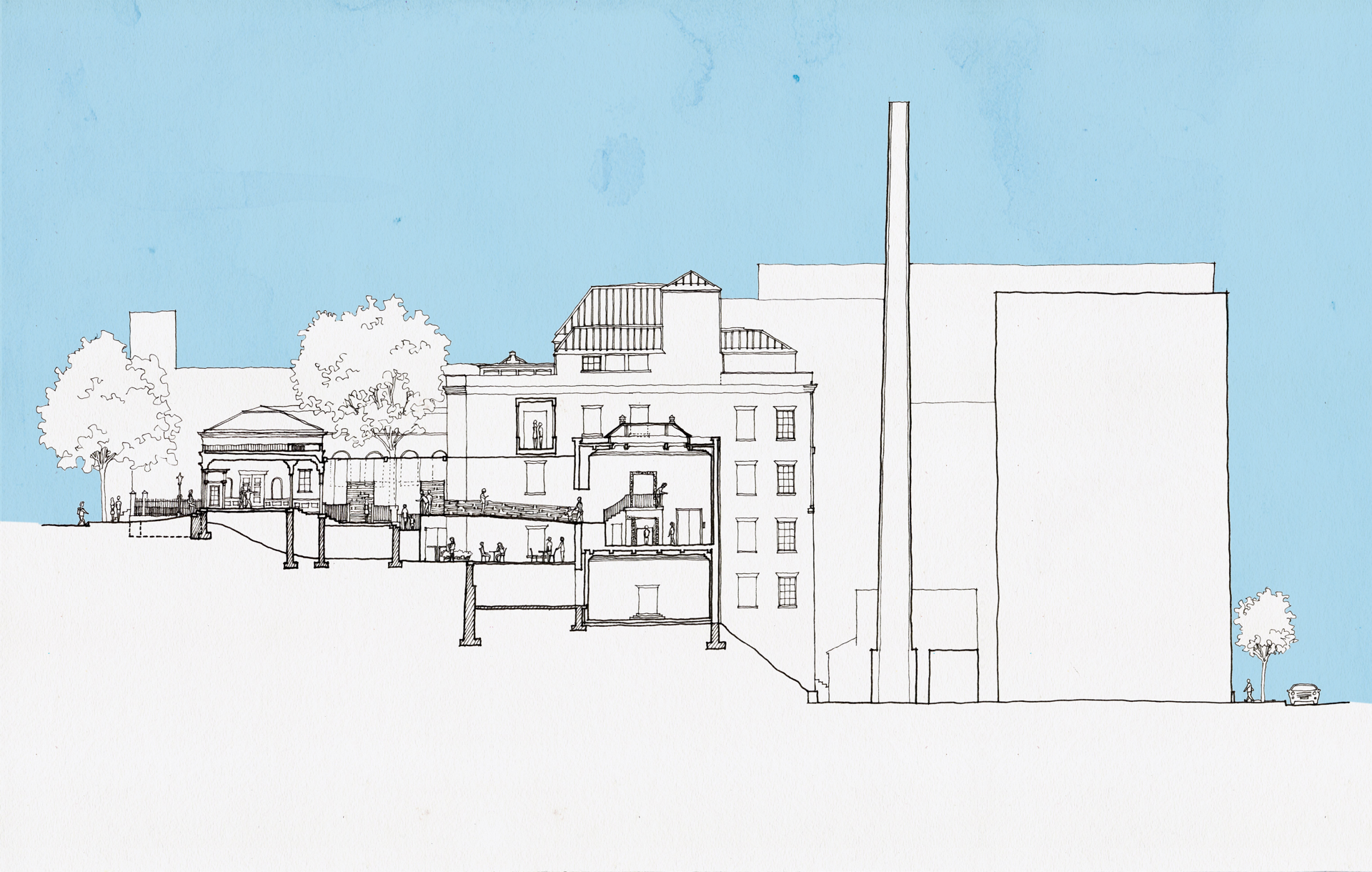
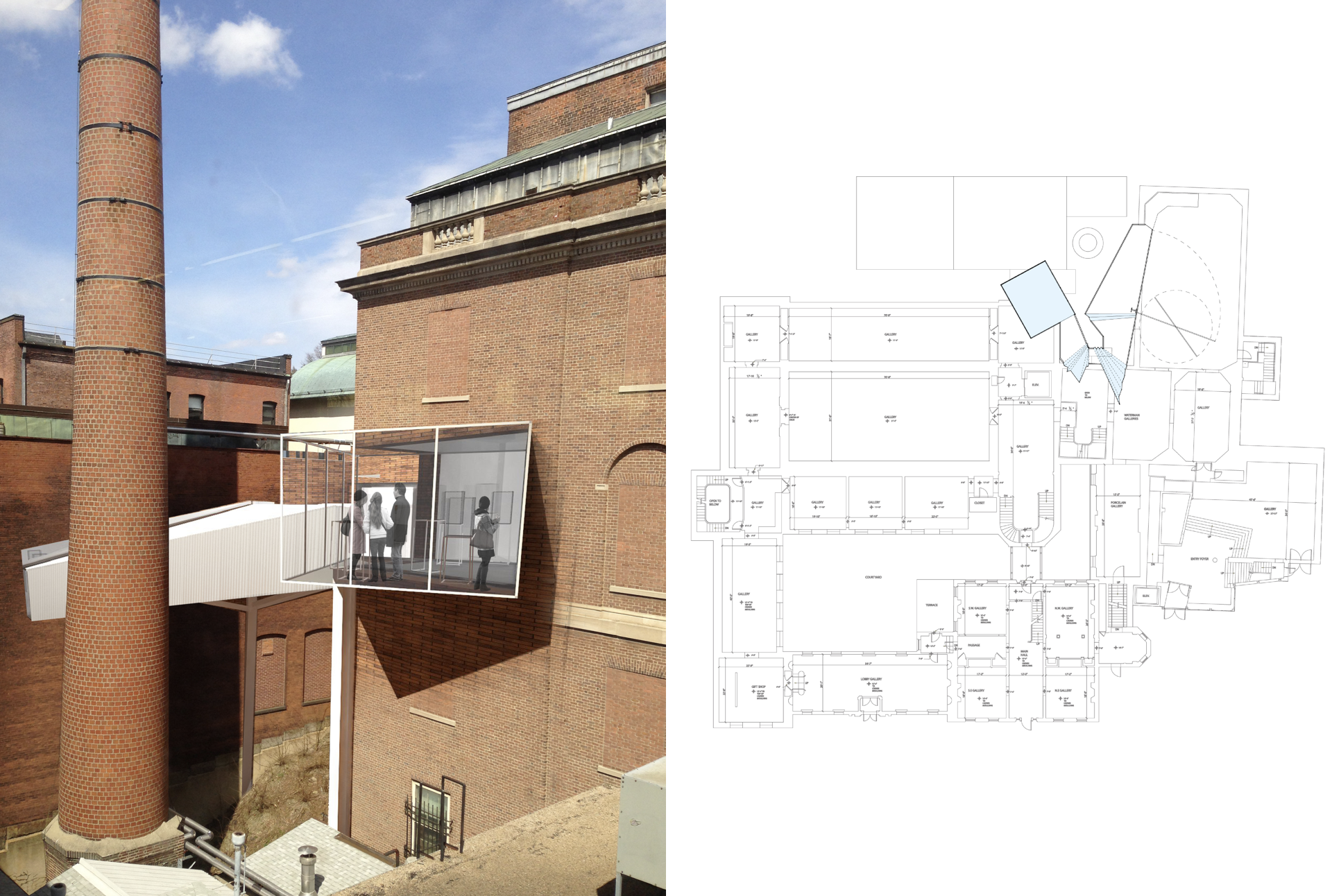
The House for a Collector of Ideas will be sited on the west side of the RISD Museum, between the boiler house and the existing museum walls. It could be think as a yin to the yang of Pendleton House which was built in 1906. There is a large space that we will appropriate for our hypothetical proposition. No plans exist for it, so the challenge is to design an extension to the museum that provides the new accommodation. I Carefully studied the floor plans of each of the museum’s levels, and worked out a suitable way for the visitor to gain access to the House for a Collector of Ideas.
Design process
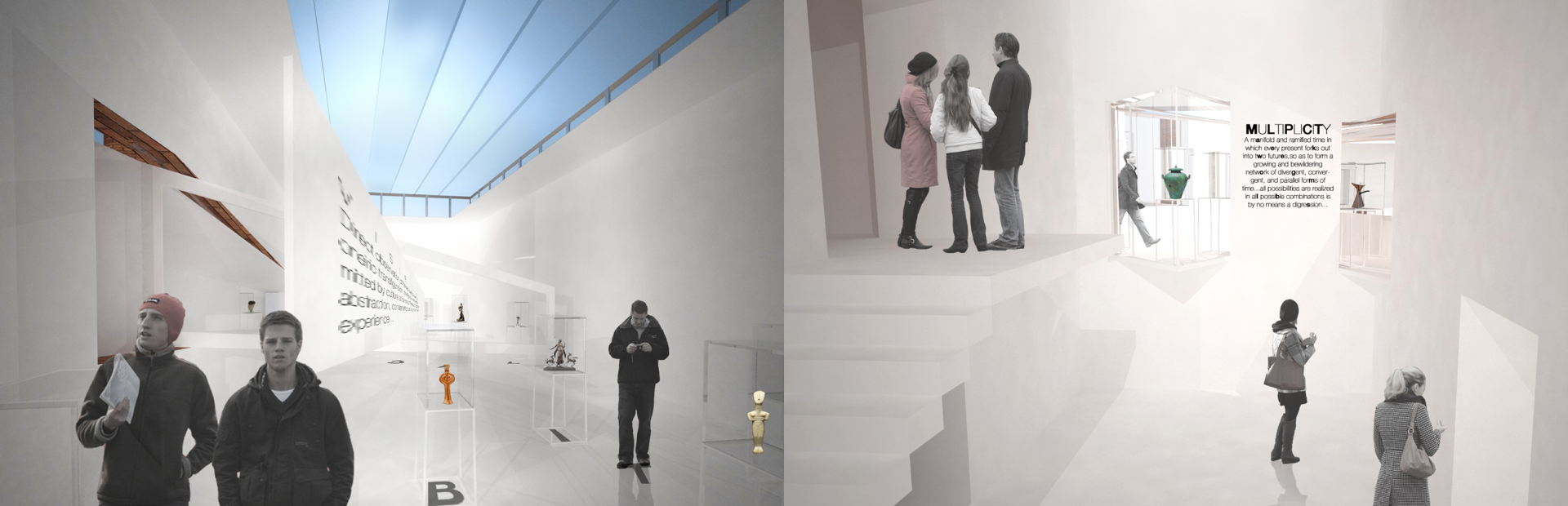
Having carefully read the memos in English and Chinese versions, I tried to translate the meanings of memos into spatial language based on my understanding. I decided to use volume, form, void and solid, lighting and material to create the narratives between people and the space about the definition of the six memos. I also considered what parts of the museum’s permanent collection could be represented according to the first five definitions.
Design Explanation
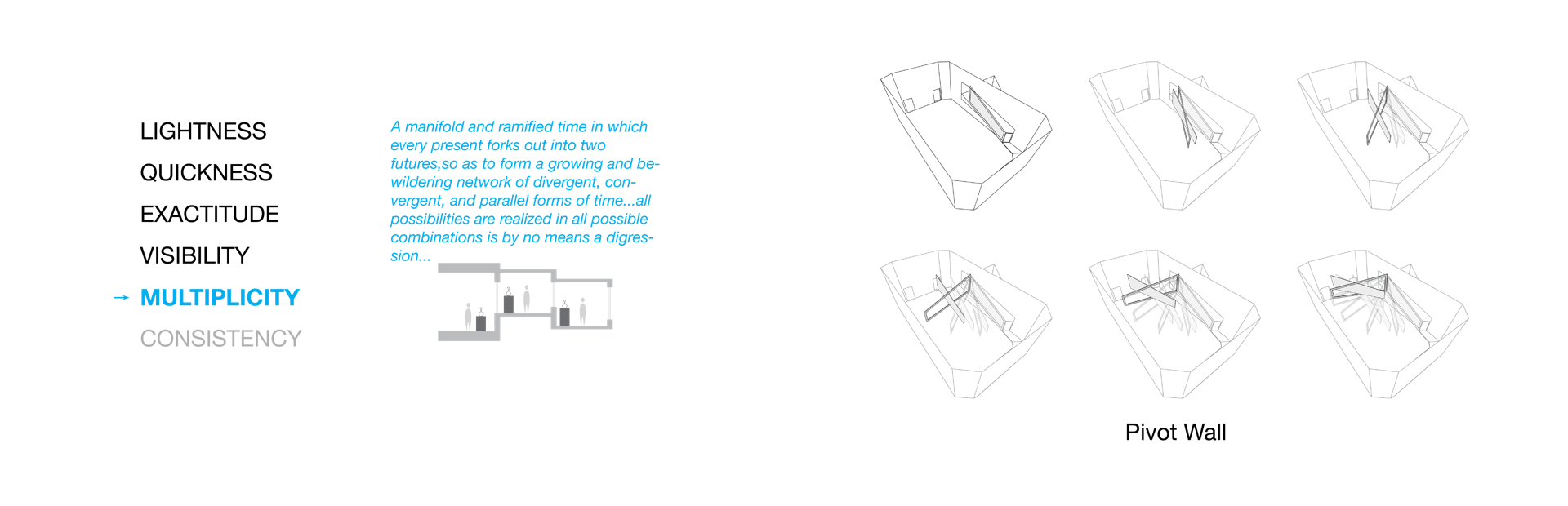
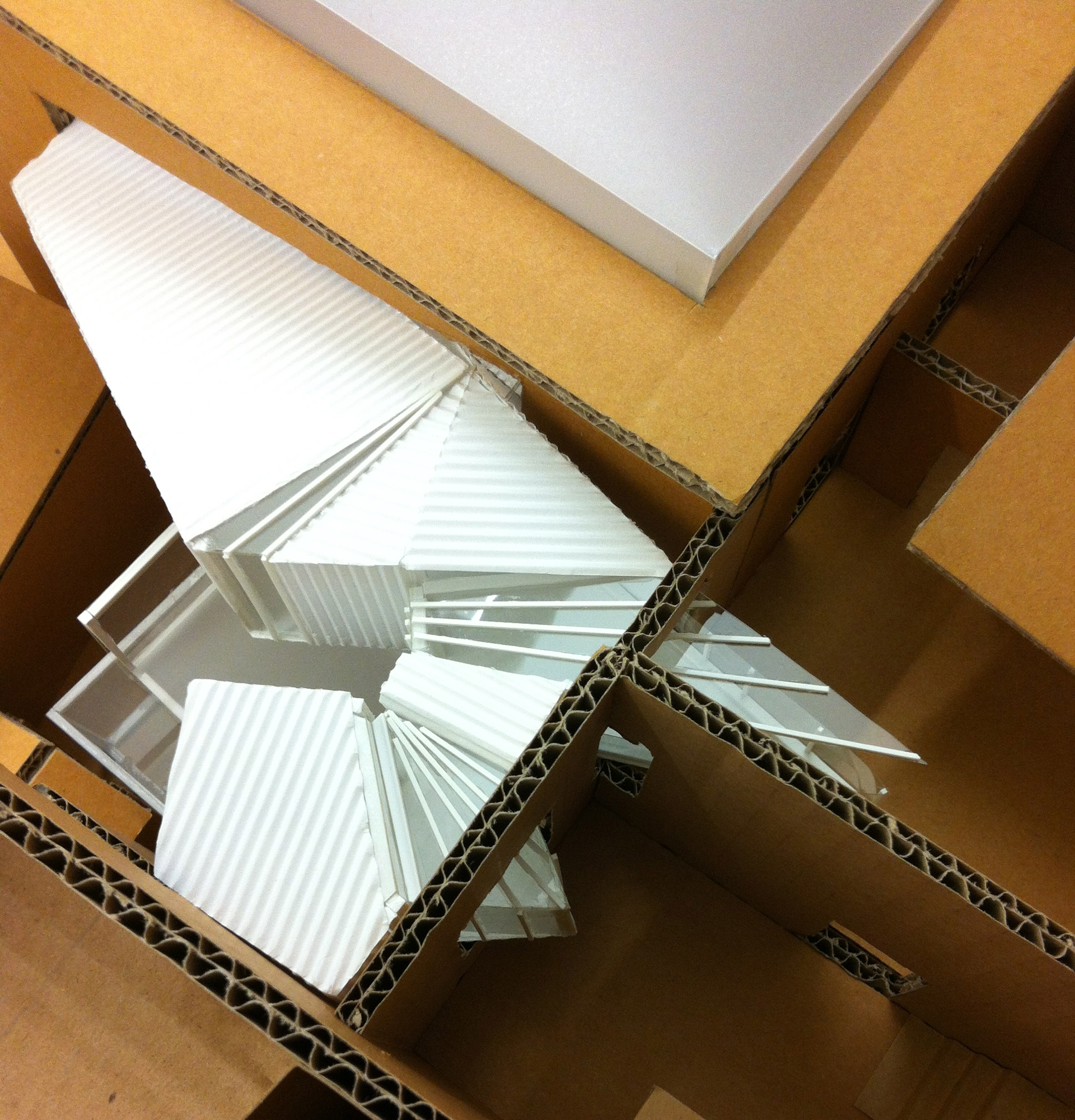
The spaces themselves carry the clear implication in my design that they are dedicated to the ideas implicit in the memos. They are flexible enough to allow for the special exhibits of guest curators who are commissioned to prepare special installations, or who may have a unique view of the narrative of each definition. Guest curators may be RISD faculty, students, or specially invited individual artists, designers or architects. The House for a Collector of Ideas is capable of dealing with emerging new technologies such as digital based spatial projectors, pivot auto controlled walls, which are showing in my design.
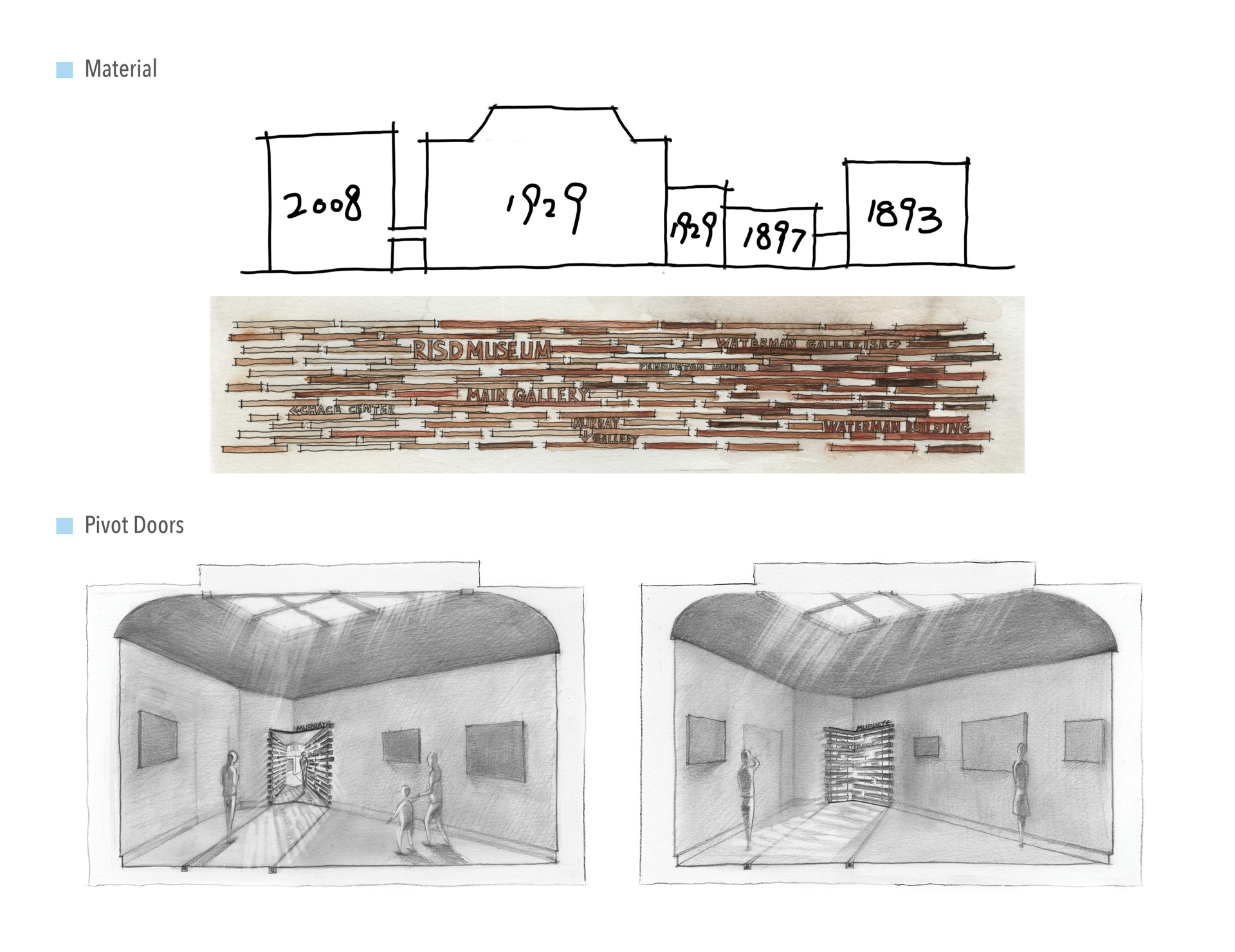
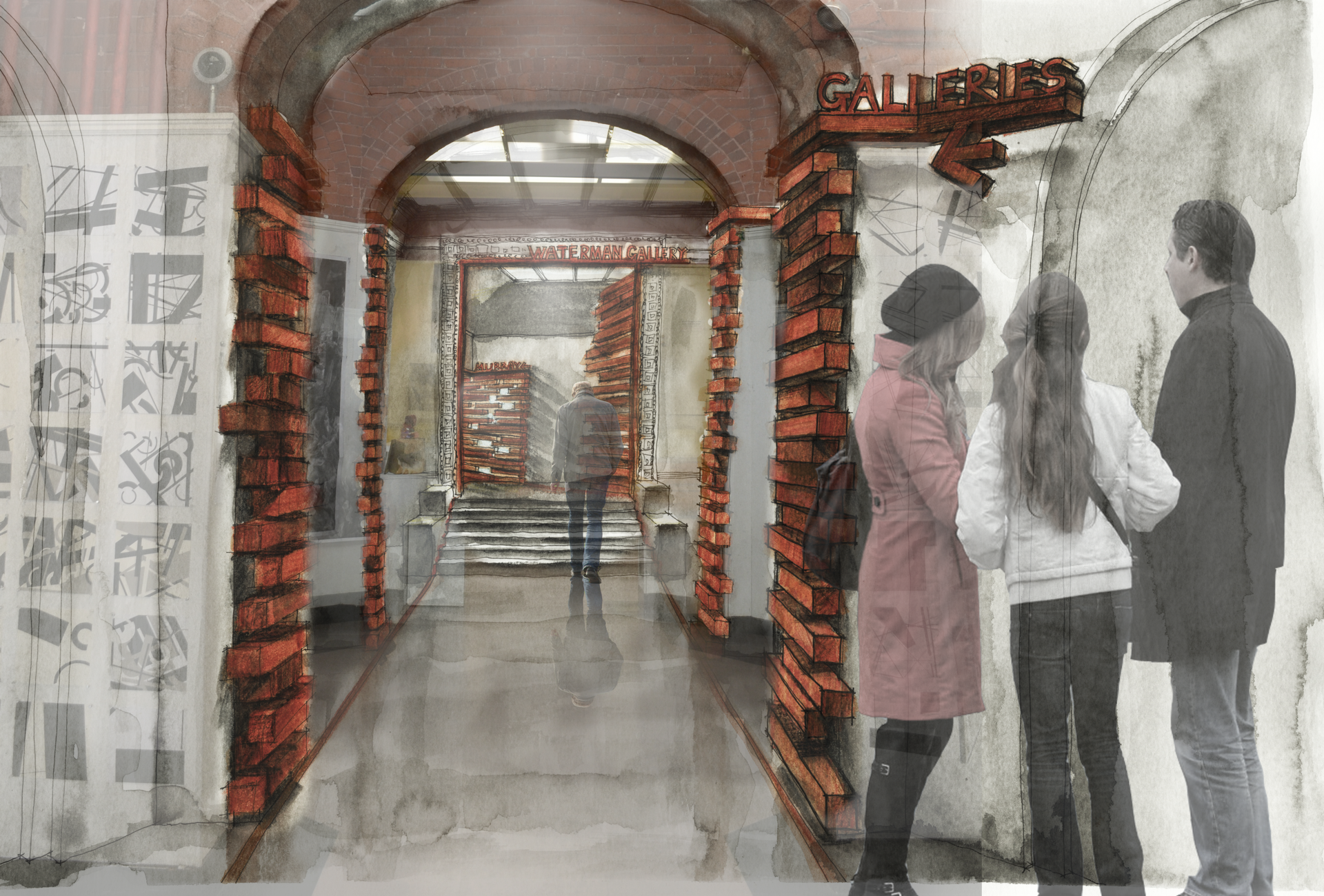
Spatial Wayfinding System in RISD Museum
Project Statement
Unlike airports and hospitals, the museum offers a more complex experience for the public. It works as media for visitors to explore their own journey. The paths are variable, but should at all times allow the visitor to understand their position within the museum.
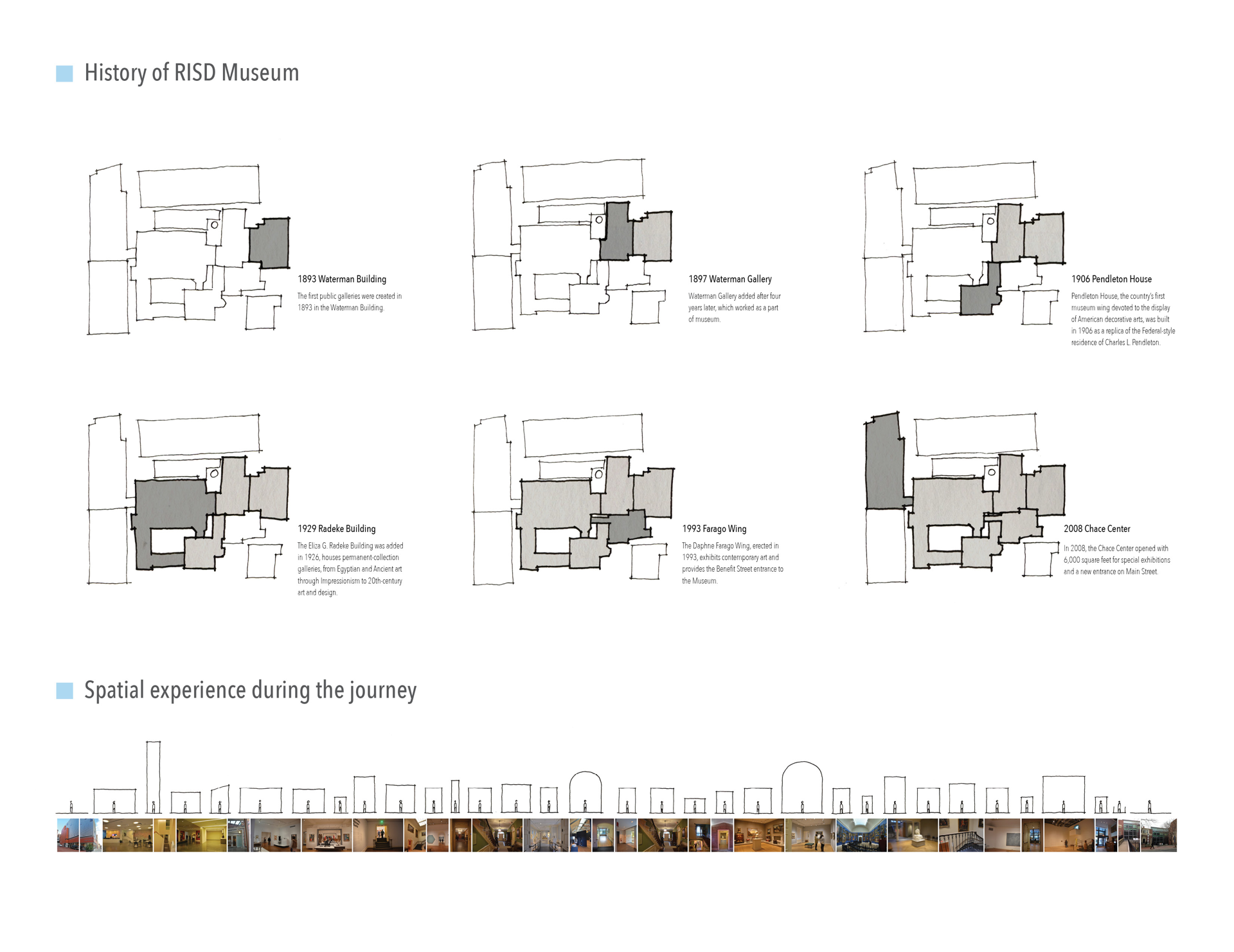
In this project, the RISD Museum is chosen as the site. It is an ideal place for this study because it has undergone four major expansions over 130 years; the structural type and the circulation path are counterintuitive and complex. It grew with the RISD campus in a haphazard and disjointed way. With its relationship to RISD and status as the preeminent art museum in Rhode Island, the RISD museum has a crucial educational responsibility.
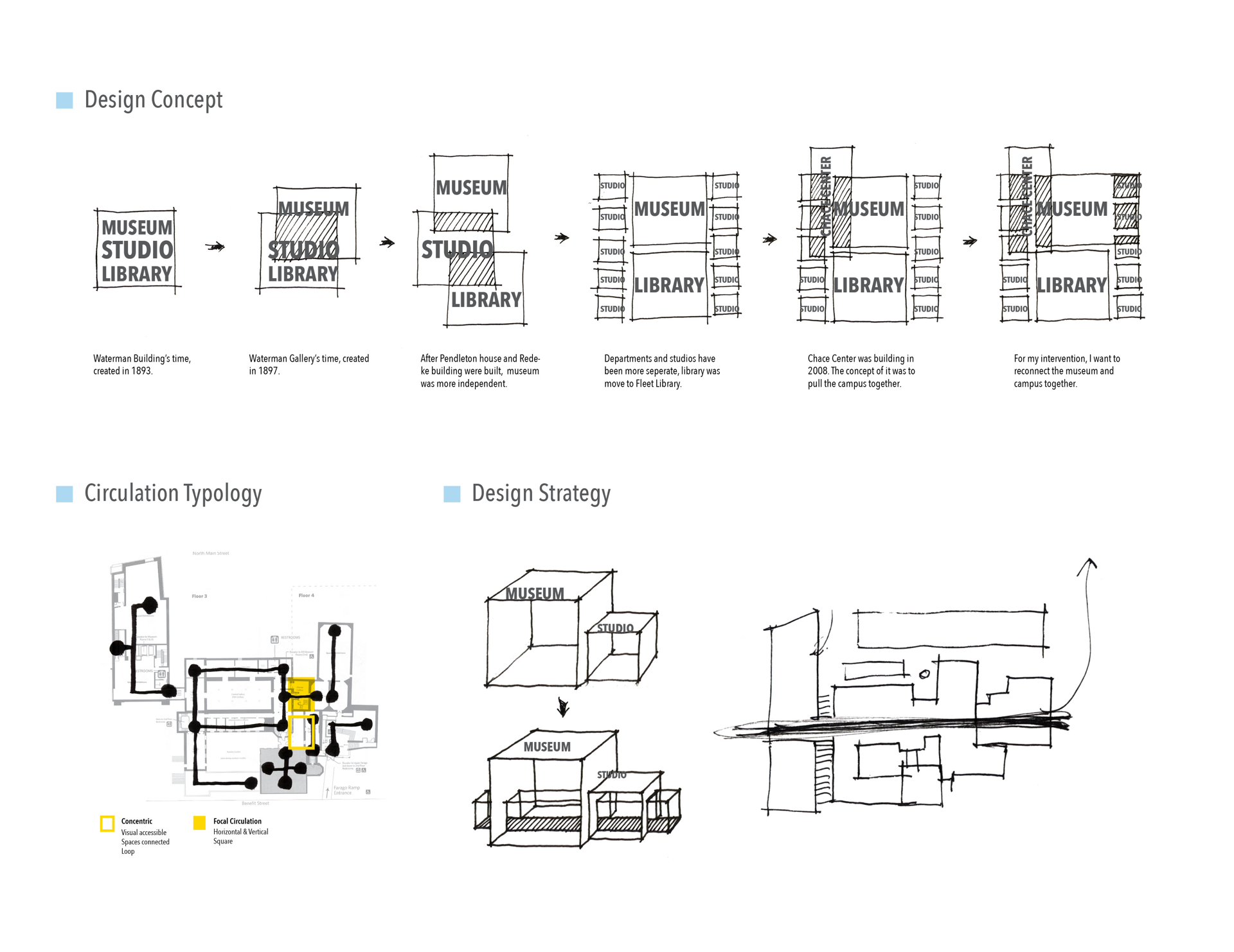
The key strategy of this project will be using a minimum intervention to approach a maximum spatial effect, as well as developing a systematic scheme that could be applied to various conditions within this building and beyond, in other public areas where visitors are unfamiliar with the building and desire a complex experience within the space.