Background Information
“The reality is that in America ... the risk is still quite low. Caution is important, obviously [but] the real issue is a different one: Our fear of Ebola has become many times worse than the problem.”
--Forbes
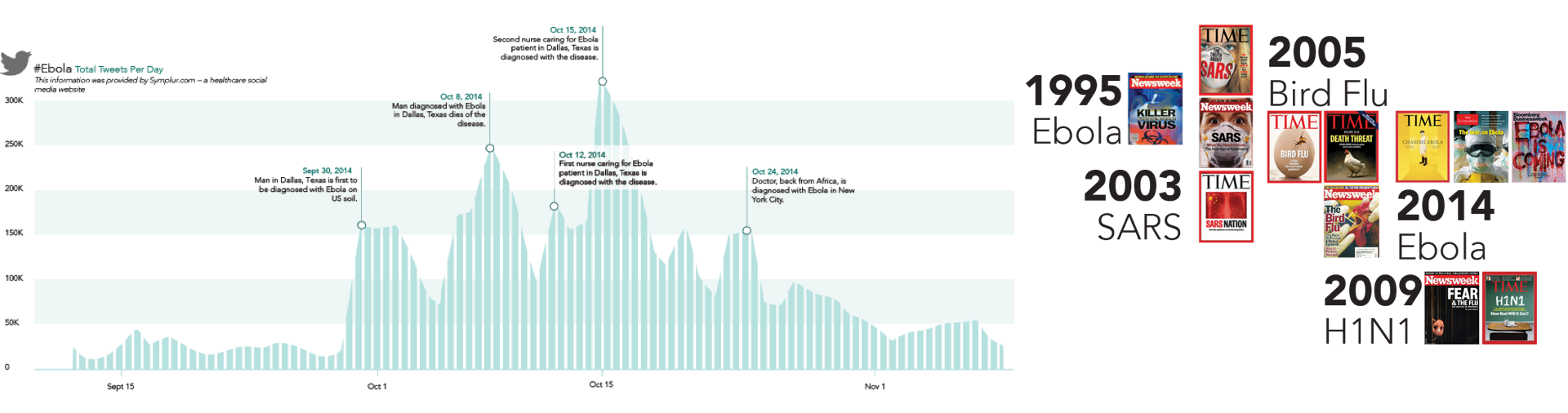
In 2014, four confirmed cases of Ebola were diagnosed in the United States—two of which were contracted inside our own country. In response, hospitals all over the country began setting their own guidelines, procedures, and protocols to prepare for combating and containing this virus if it were to walk through their doors.
After a couple months of mass media coverage and population fear, the virus was said to have been successfully contained and the United States was declared “Ebola free.”
In the aftermath of this situation, healthcare professionals were able to see several areas within our system which would have been the source for many problems if the epidemic had become worse. These issues revolved around three main themes: communication, education, and containment. Fixing some of these problem spaces would be extremely beneficial in case of a future epidemic situations, and could also better the entire healthcare industry.
Problem Statements & Themes
Communication
Keep the patient in the hospital in contact with family at home;
Keep family members in contact with the care team;
Keep hospitals aware of any changes in Center of Disease Control’s recommendations;
Keep population informed;
Keep hospital staff informed about epidemic level patients.
Education
Improve process for training staff.
Containment
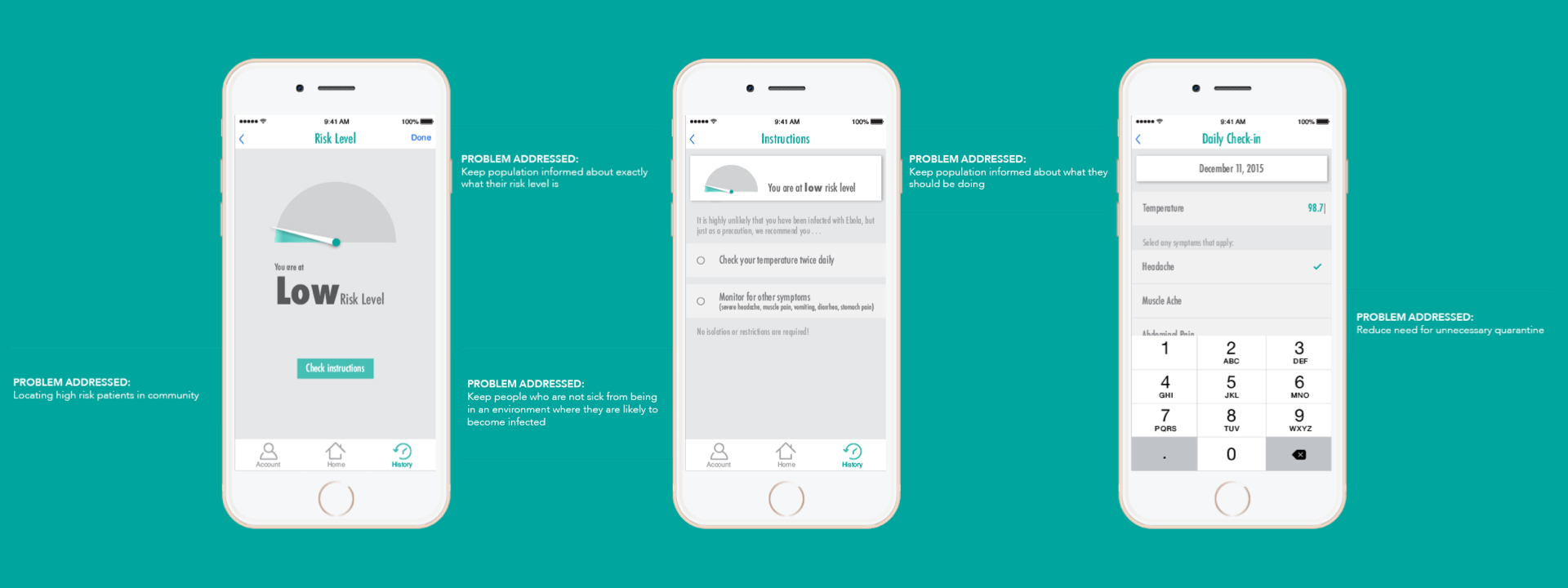
Keep people who are not sick from being in an environment where they are likely to be infected;
Figure out who has been in contact with index case;
Improve voluntary quarantine protocols to better enforce;
Tracking and locating high risk patients in community.
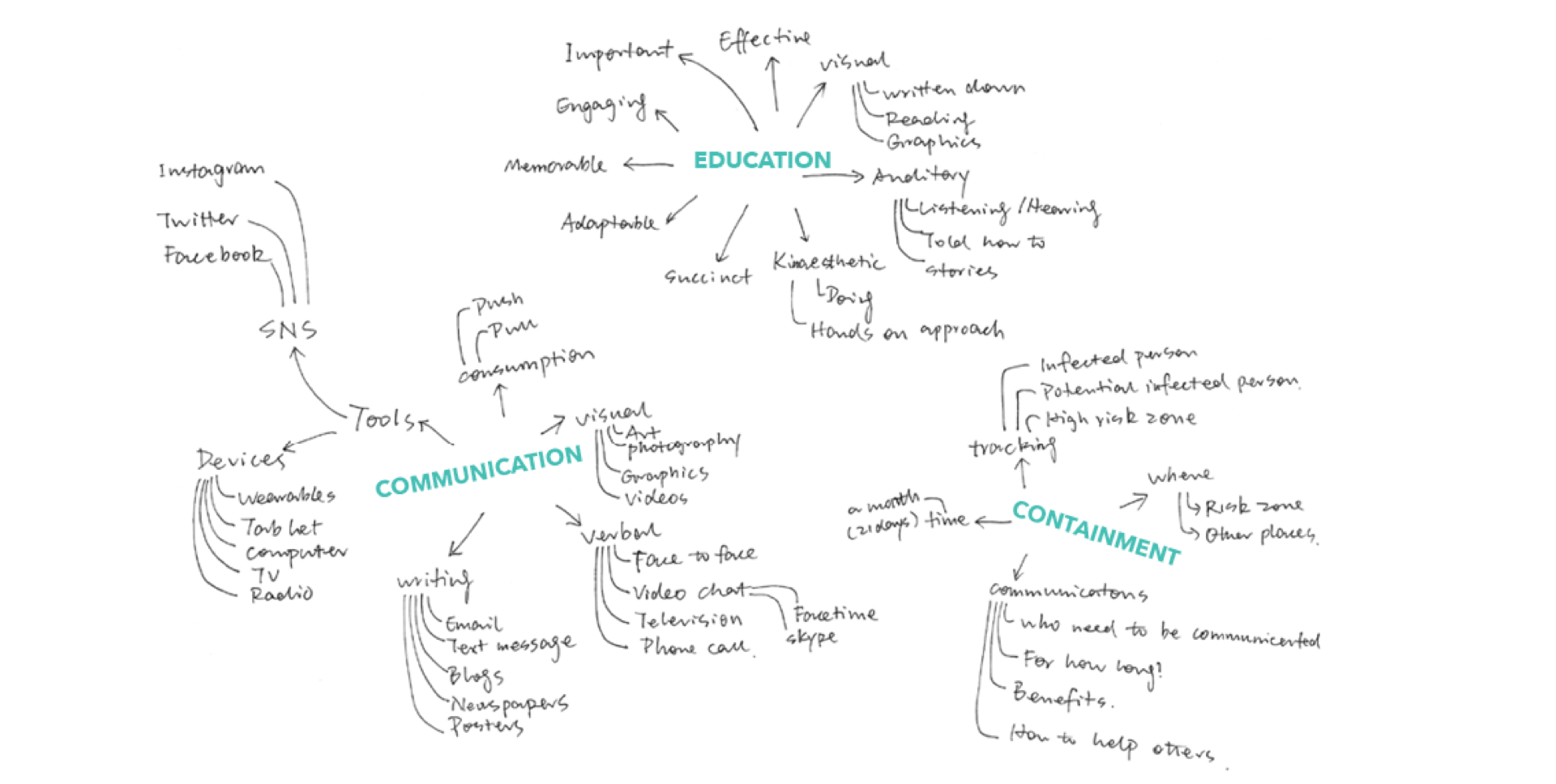
Mindmap
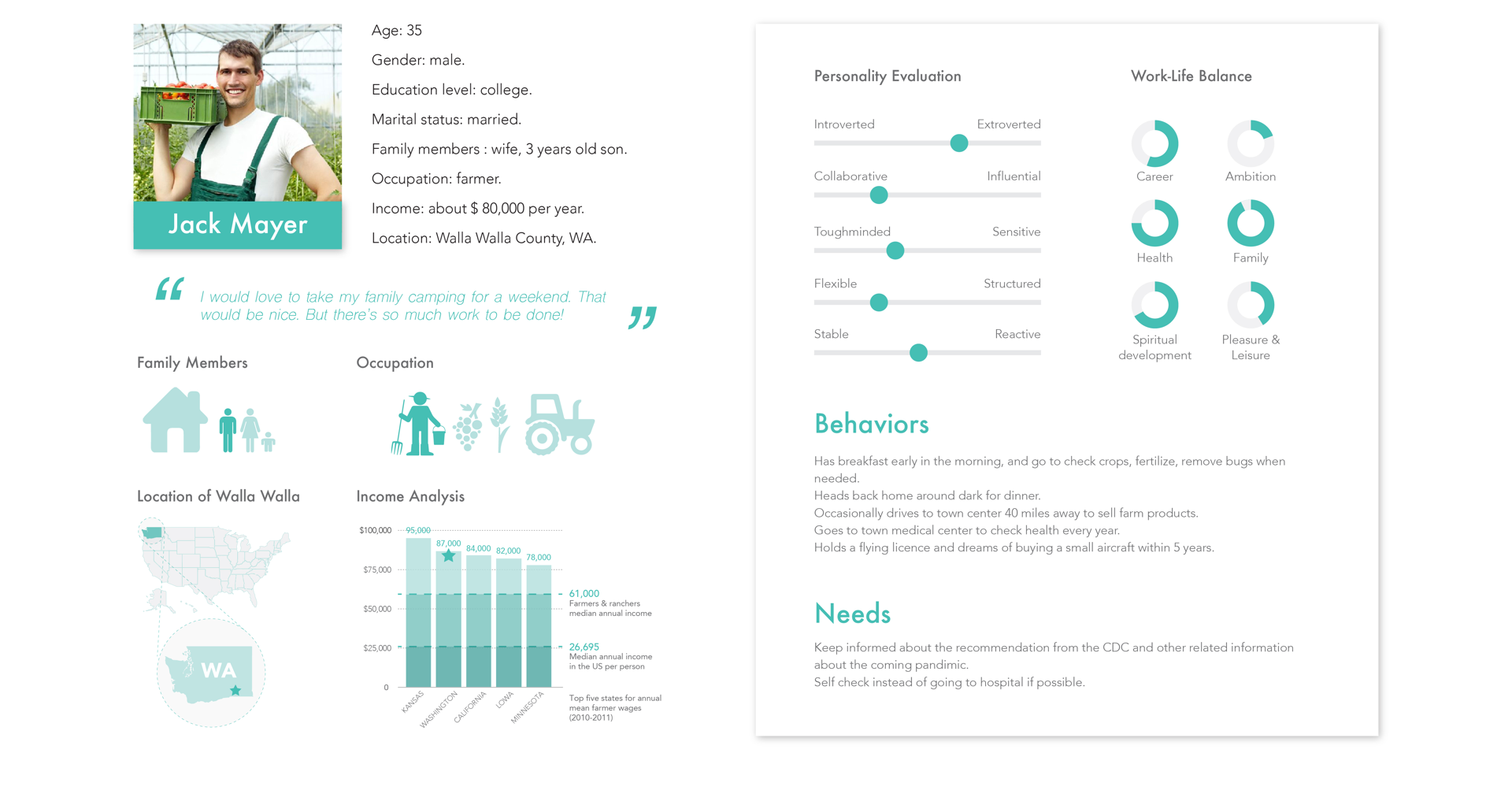
Persona
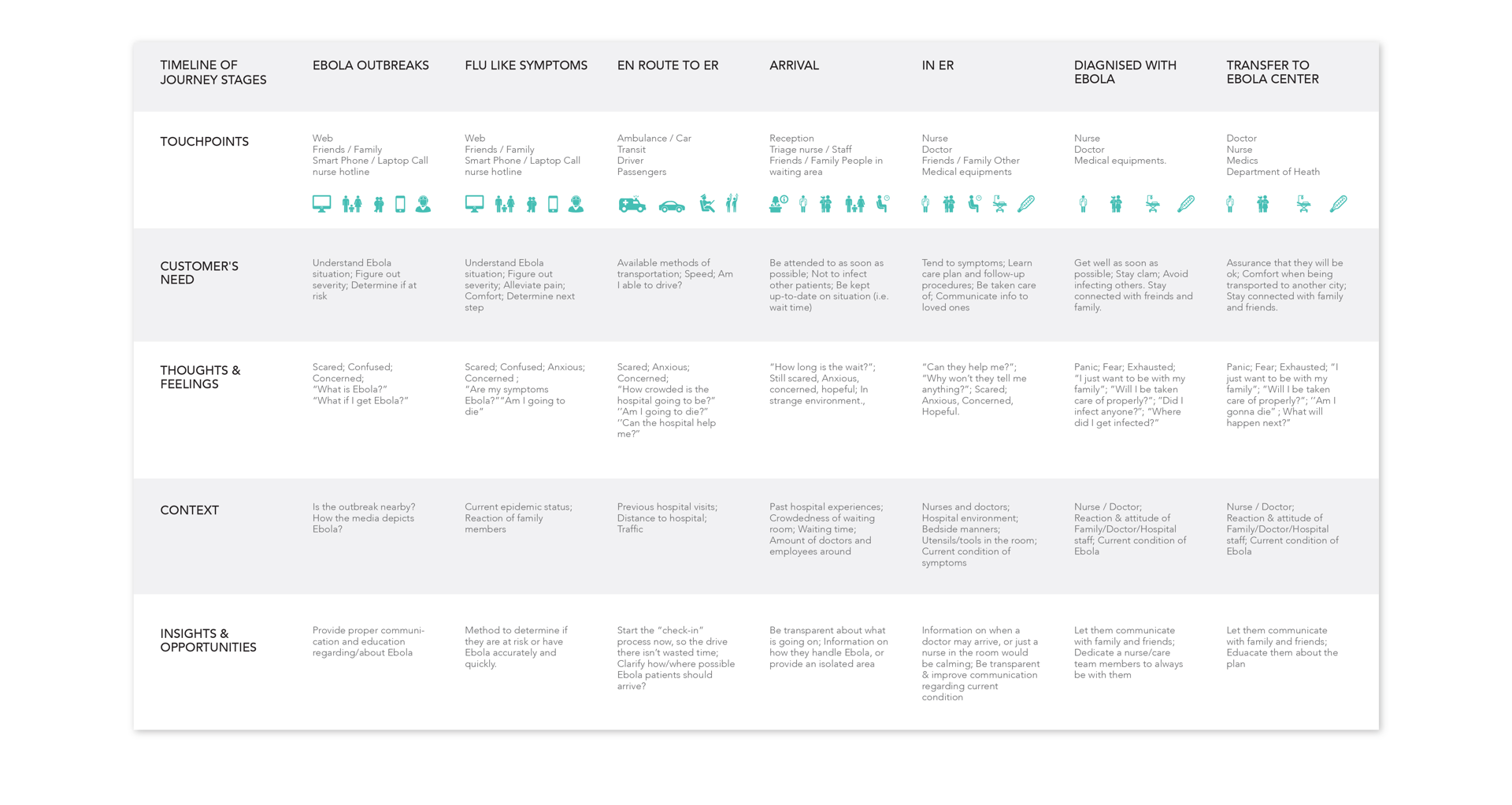
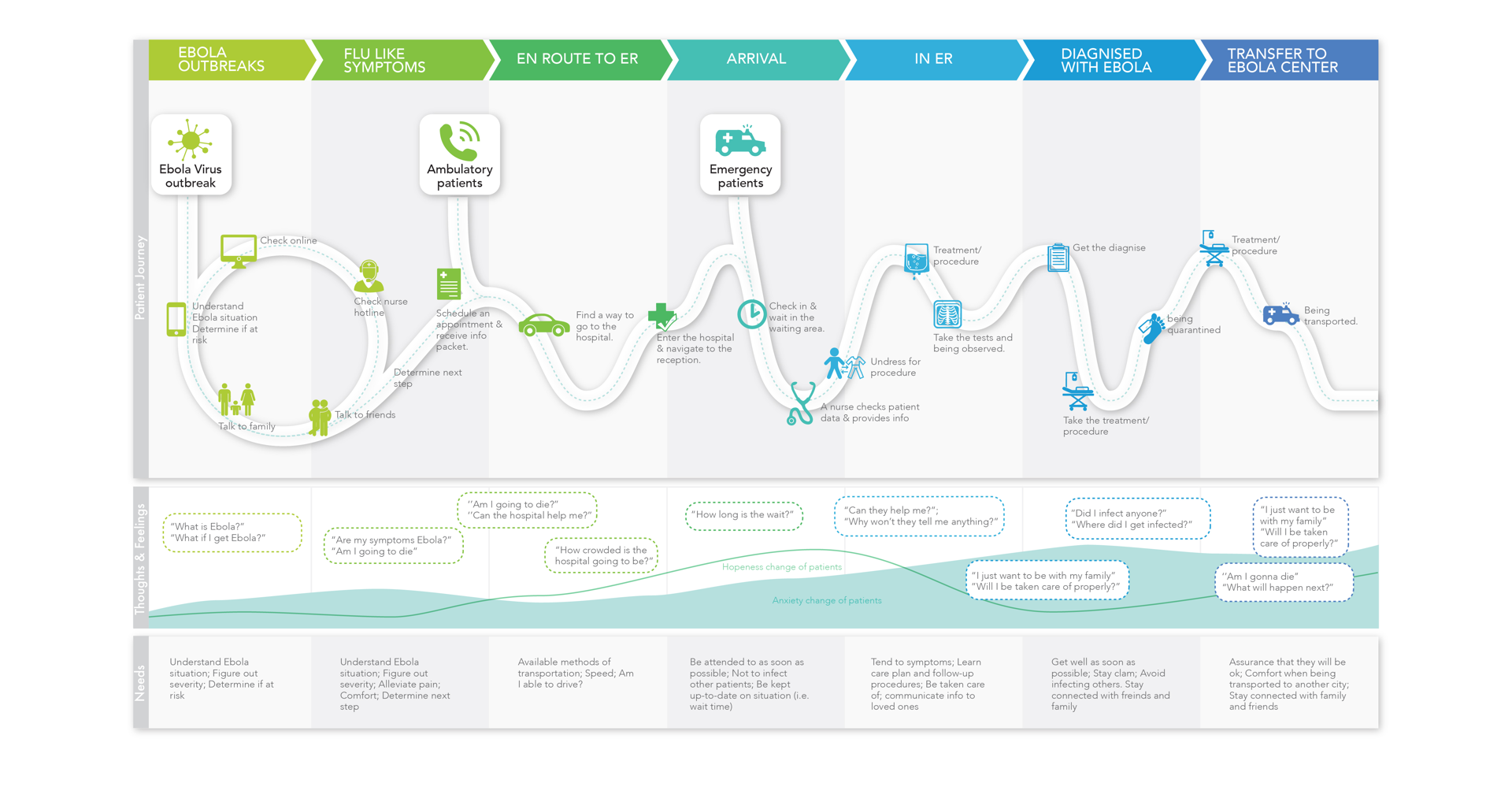
Experience Mapping
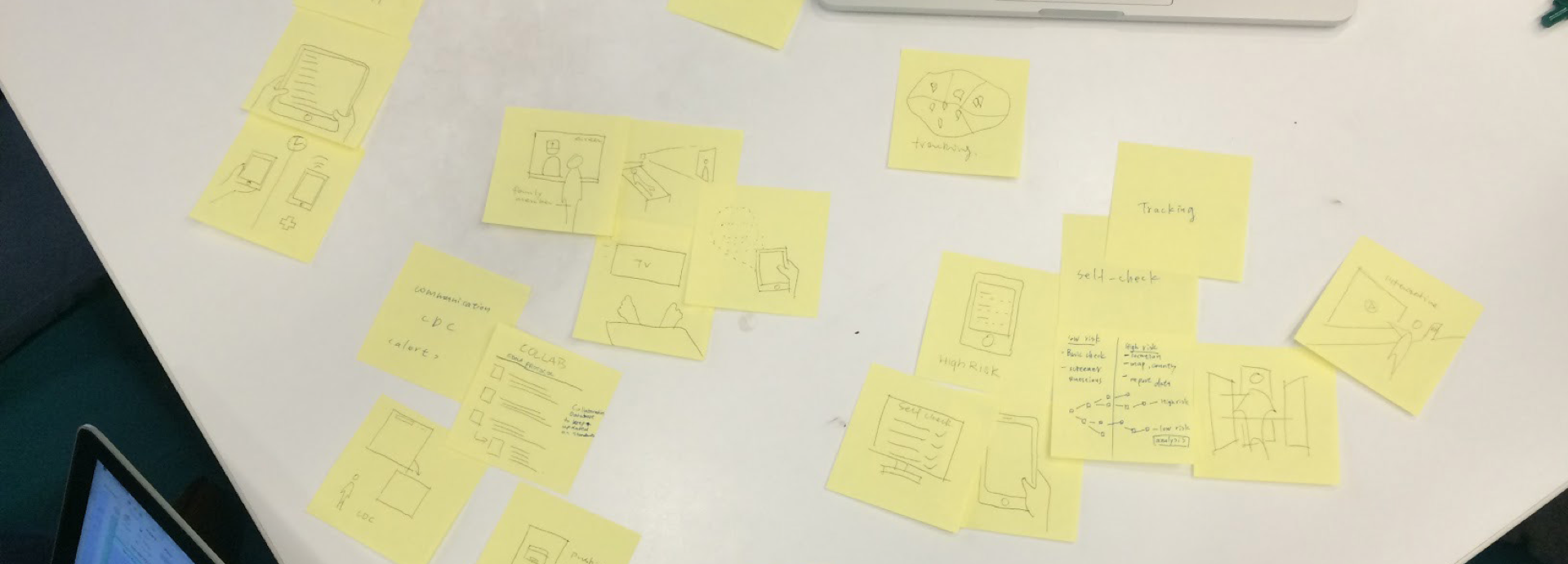
Brainstorm & Sketch
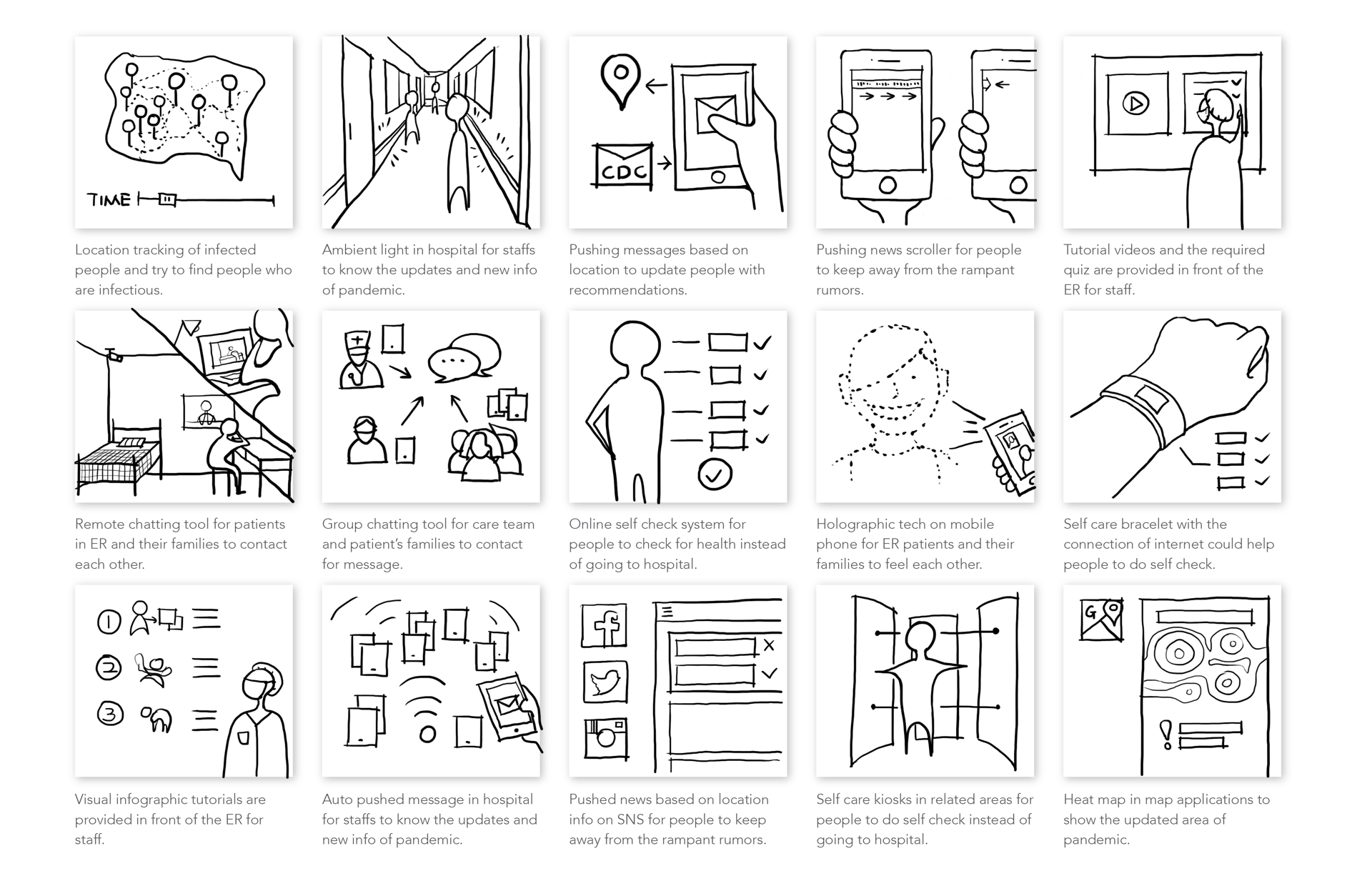
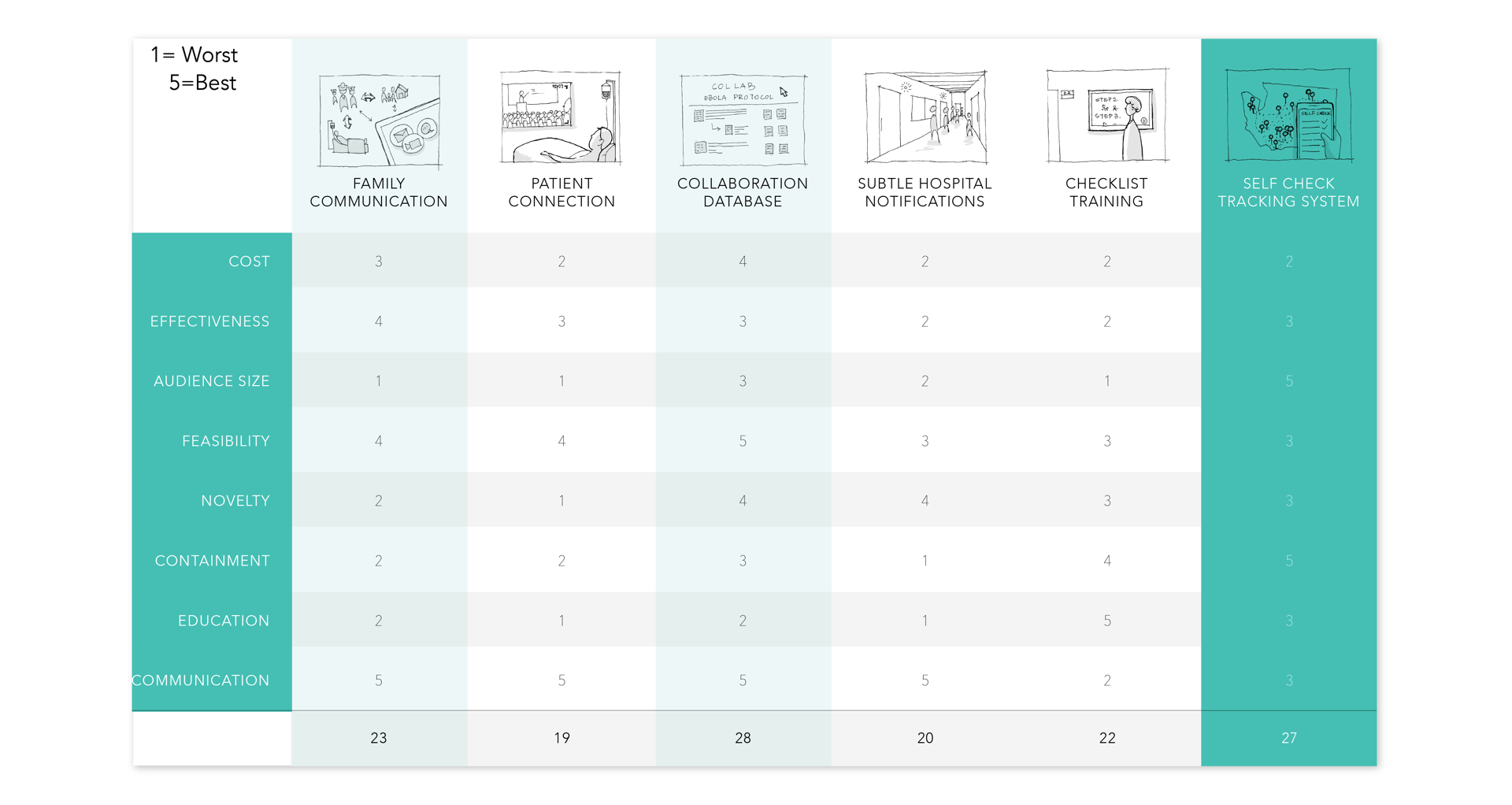
After the background research, problem defined and self sketch phase, we started our group brainstorming phase. We shared our individual ideas and analyzed them. Ideas had been organized ideas by different aspects.
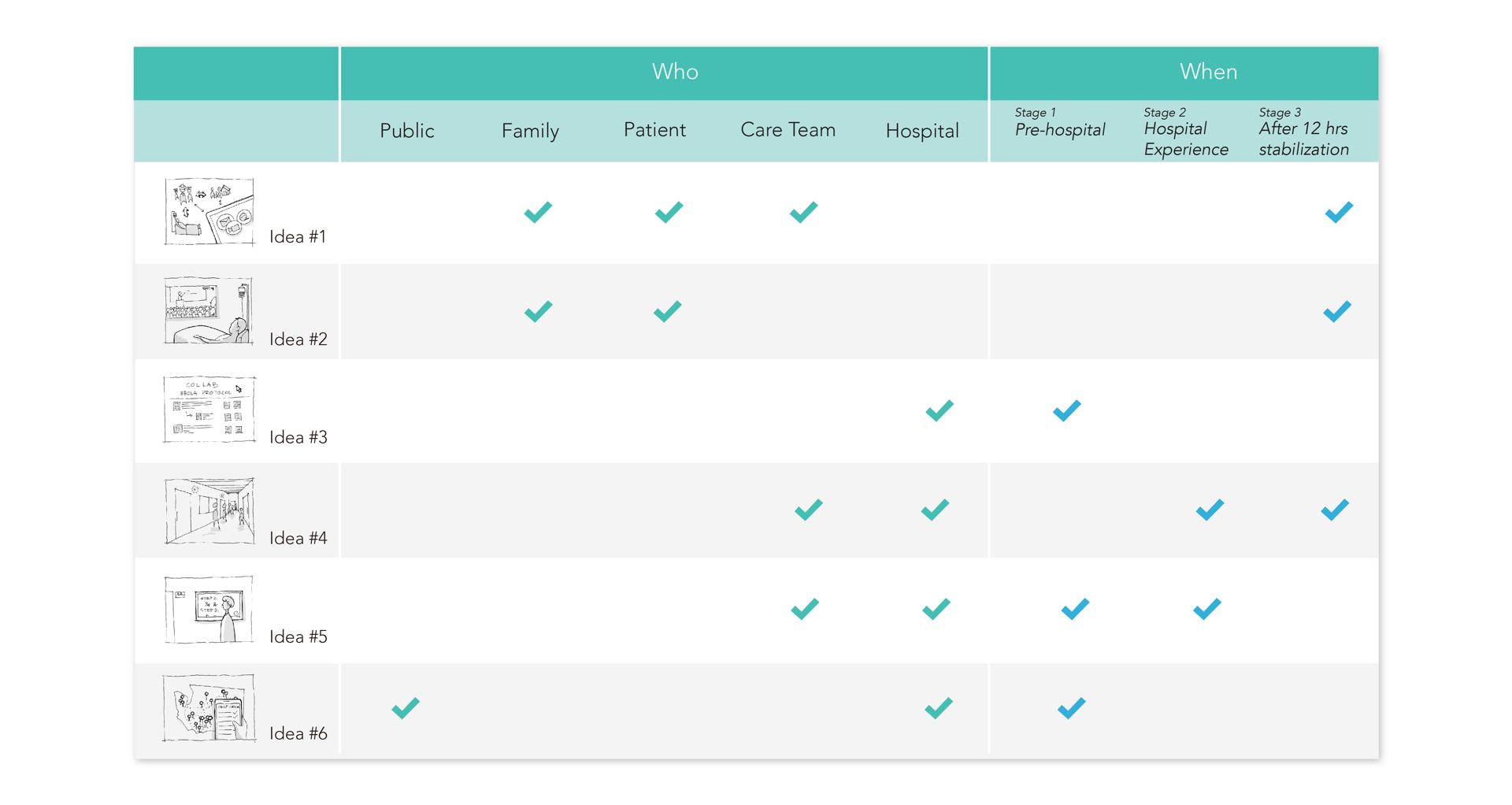
Two ideas from communication point of view are dealing with the disconnection issue between patients, family members and care teams; one idea is about the communication and networks between CDC and hospitals; one is about the instant messaging for hospital and staff; another idea is about care team education and the last one is about public tracking and self checking.
Concept Iteration
Solution
“panic is less a side-effect of Ebola than its own sort of infectious disease, spread by misinformation and fear... right now there’s a lot more panic in the U.S. than Ebola.”
--the Guardian
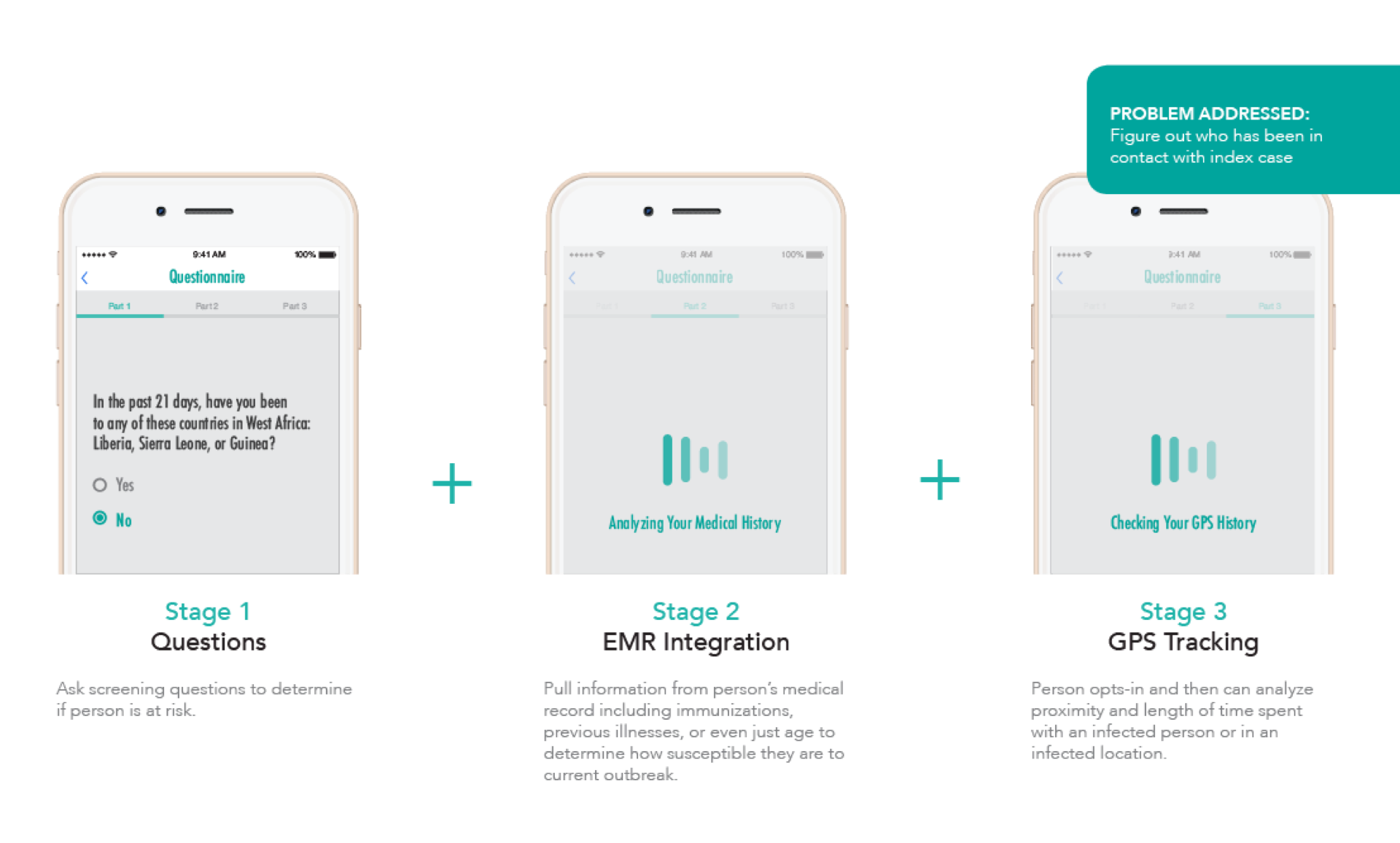
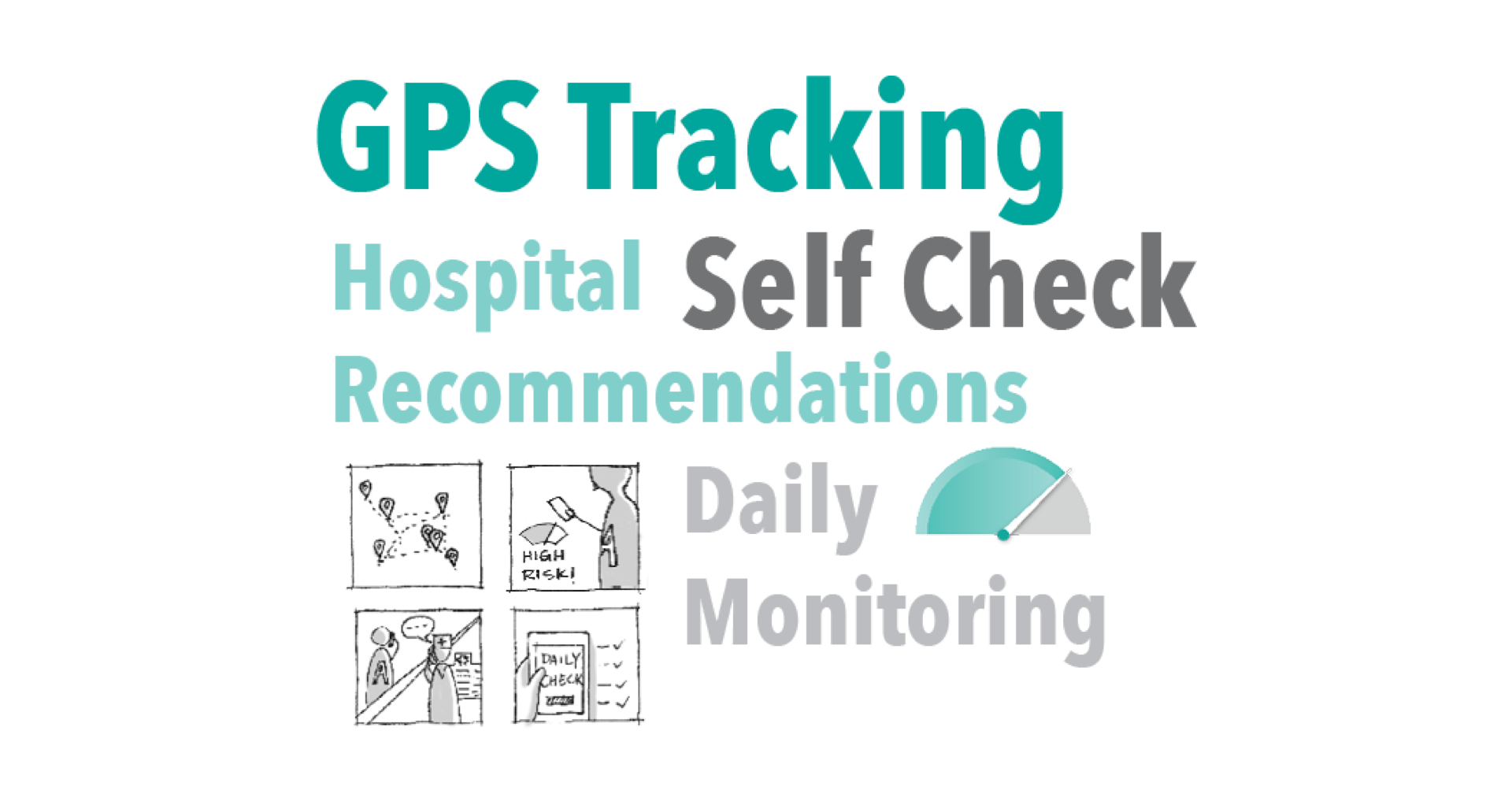
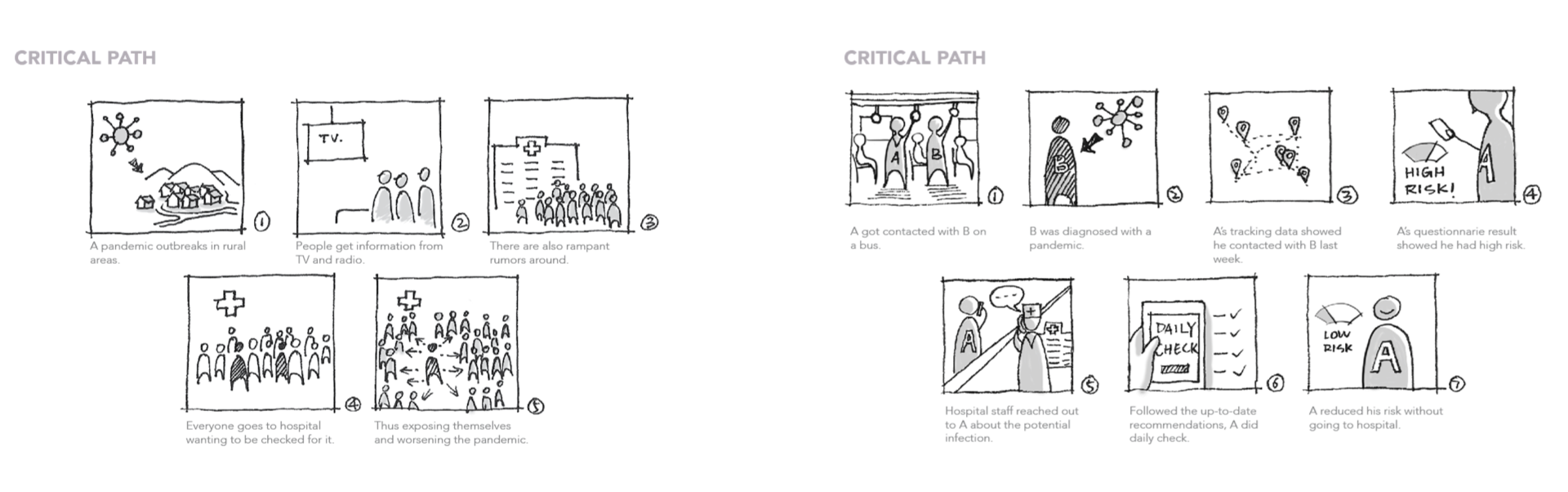
Our final solution is to prevent potential panic for future pandemic. We use GPS as a means to build a tracking system for tracking the dynamic of epidemic. Provide notification and up-to-date hospital recommendations for people who exposed themselves in high risk zone. Also people can use daily monitoring feature to do self check and they can get connected with local hospital if needed.
Critical Path
Wireframe
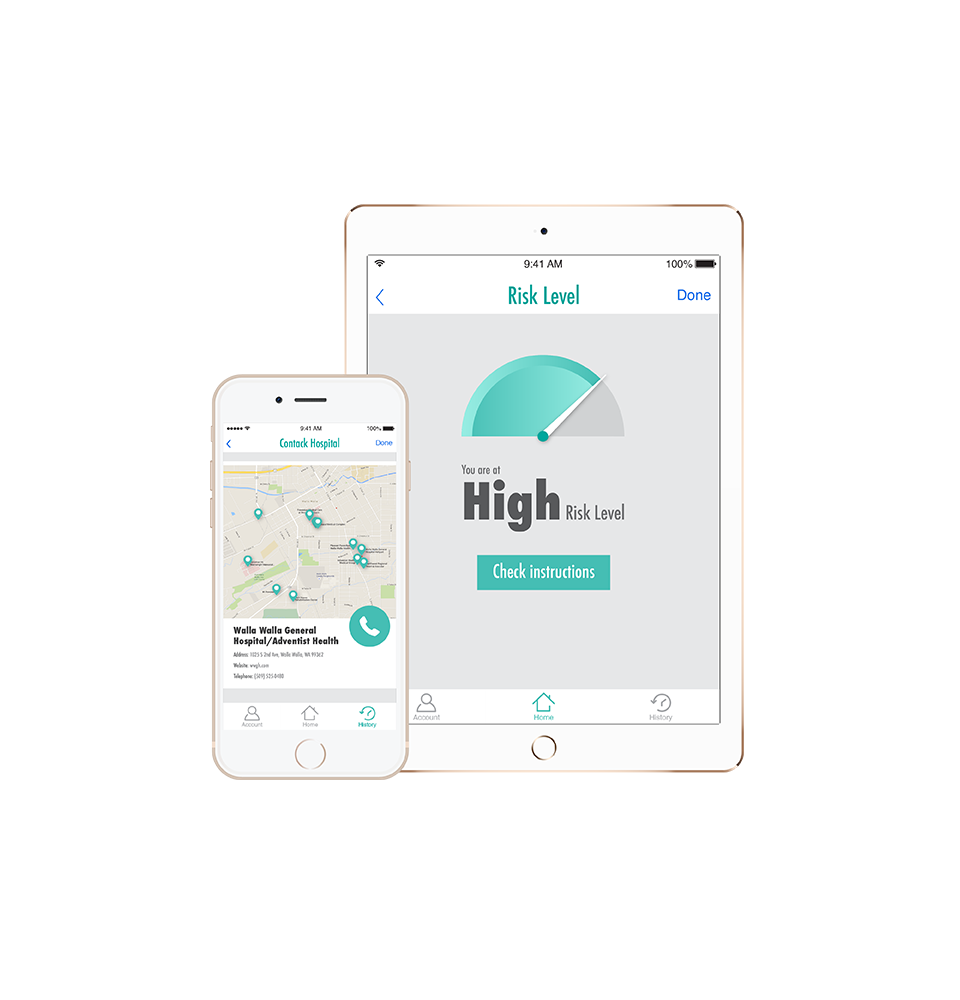
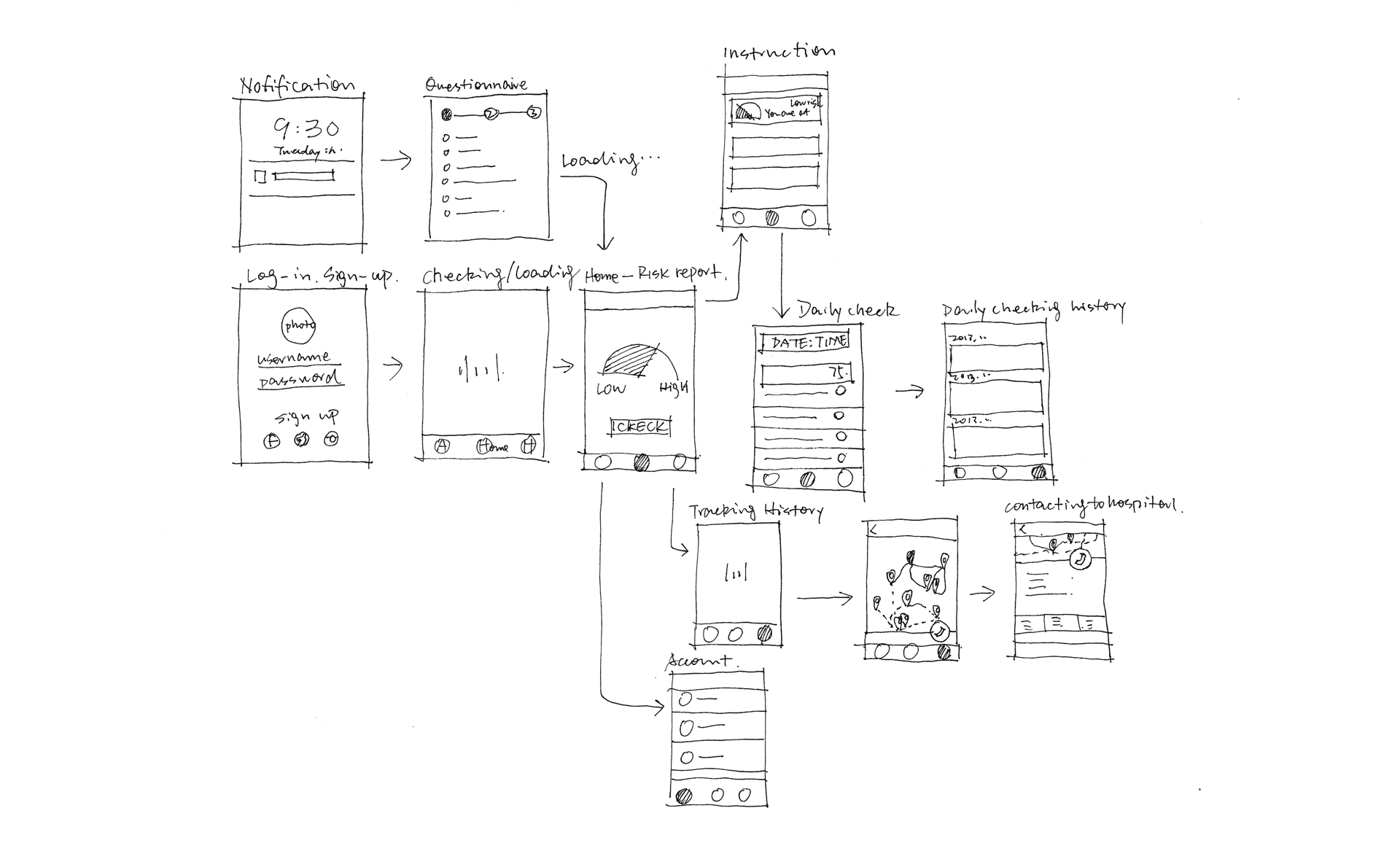
The workflow of the application had been discussed and defined. The basic features of the application includes auto-notification, risk report, GPS tracking and tracking history check, instruction check, daily check and analysis, hospital contact. People can using SNS account to log in if needed.
Interface Design
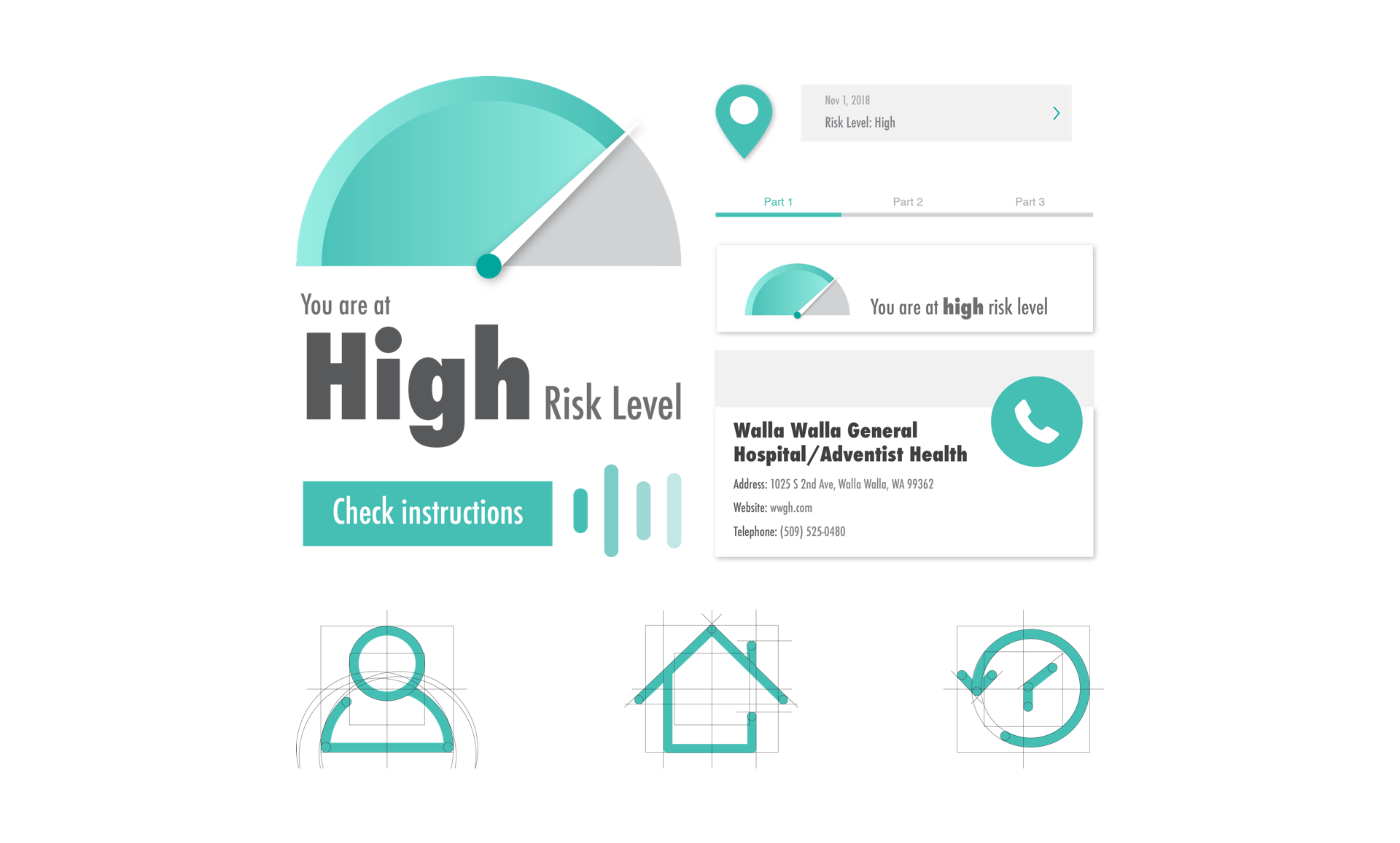
Using the dial diagram as a means to show the changing of risk level in order to provide a clear and measurable information. Choosing teal as the color scheme based on the identification of health care institutes.
Following the flat design method, the icons of the applications are designed based on simple geometry shape with an outline only. A “break” in between to imply the smart feature.